
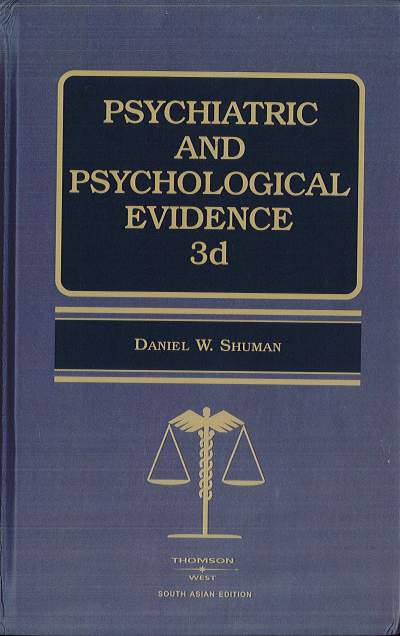


Psychiatric And Psychological Evidence, 3d
RM795.00
Psychiatric And Psychological Evidence, 3d
| Author | Daniel W. Shuman |
| Publication Date | 2014 |
| ISBN | 9789381082379 |
| Format | Hardcover |
| Publisher | Thomson Reuters |
Be well-versed in psychiatric and psychological research. Information is easily accessible. Part one: Fundamentals of psychiatric and psychological professions; theories of mental illness, how to diagnose and treat them; how to do literature searches. Part two: Applicable rules of evidence; acquiring and presenting evidence, qualifying experts, and evidence restrictions. Part three: Using psychiatric and psychological evidence in criminal cases, child-related legal concerns, and competency hearings.
Features:
- Introduction to psychology and the psychiatric sector, as well as research assistance.
- Competence proceedings are discussed.
- Information is easily accessible, including Westlaw search references.
TABLE OF CONTENTS of Psychiatric And Psychological Evidence, 3d
- Theories of Mental Illness
- Psychiatric and Psychological Diagnosis
- Treatment
- The Professions of Psychiatry and Psychology
- Researching Psychiatric and Psychological Literature
- Obtaining Psychiatric and Psychological Evidence
- General Requirements for the Presentation of Expert Psychiatric and Psychological Evidence
- Qualification of the Expert
- Form and Mode of Presentation of Psychiatric and Psychological Evidence
- General Limitations on Psychiatric and Psychological Evidence
- Criminal Proceedings: Pretrial
- Criminal Proceedings: Trial
- Legal Issues Involving Children
- Personal Injury Litigation
- Competence
- Civil Commitment
- Novel Applications of Psychiatric and Psychological Evidence
- Nontestimonial Uses of Psychiatric and Psychological Evidence
- Table of Laws and Rules
- Table of Cases
- Bibliography
- Index
Find more books like Psychiatric And Psychological Evidence: Medical Law
Latest releases
Get your copy today!


Save RM51.00


Malaysia's Largest Authorised Premium Reseller